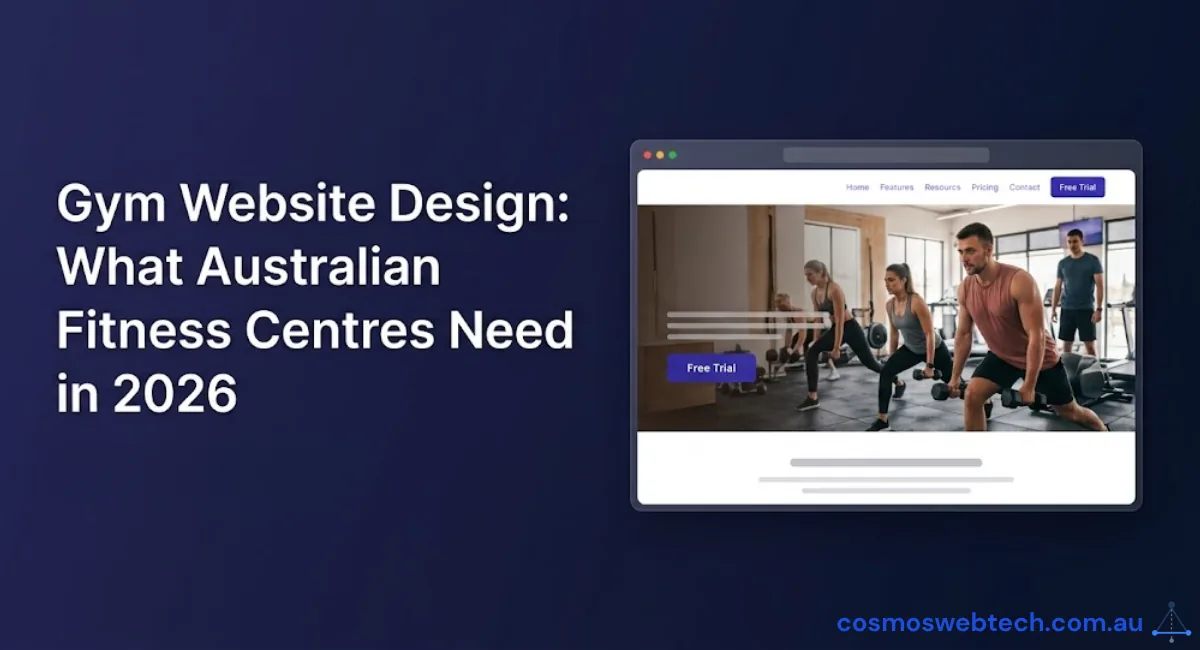
Australia has one of the most active fitness cultures in the world — and the numbers back it up. According to Fitness Australia, the health and fitness industry generates over $2.4 billion annually, with more than 3,600 gyms operating across the country and roughly 15% of Australians holding an active gym membership. That is a massive, motivated market actively searching for their next gym online.
Here is the catch: if your gym’s website does not immediately answer “why should I join YOU?”, that searcher clicks away to your competitor — often a big-box chain with a national marketing budget. Good gym website design in Australia is not about looking pretty. It is about converting curious visitors into paying members, quickly and consistently.
Whether you run an independent gym in Blacktown, a boutique fitness studio in Castle Hill, or a personal training studio somewhere in the Hills District, this guide covers exactly what your website needs in 2026 to compete and win.
What Should a Gym Website Include?
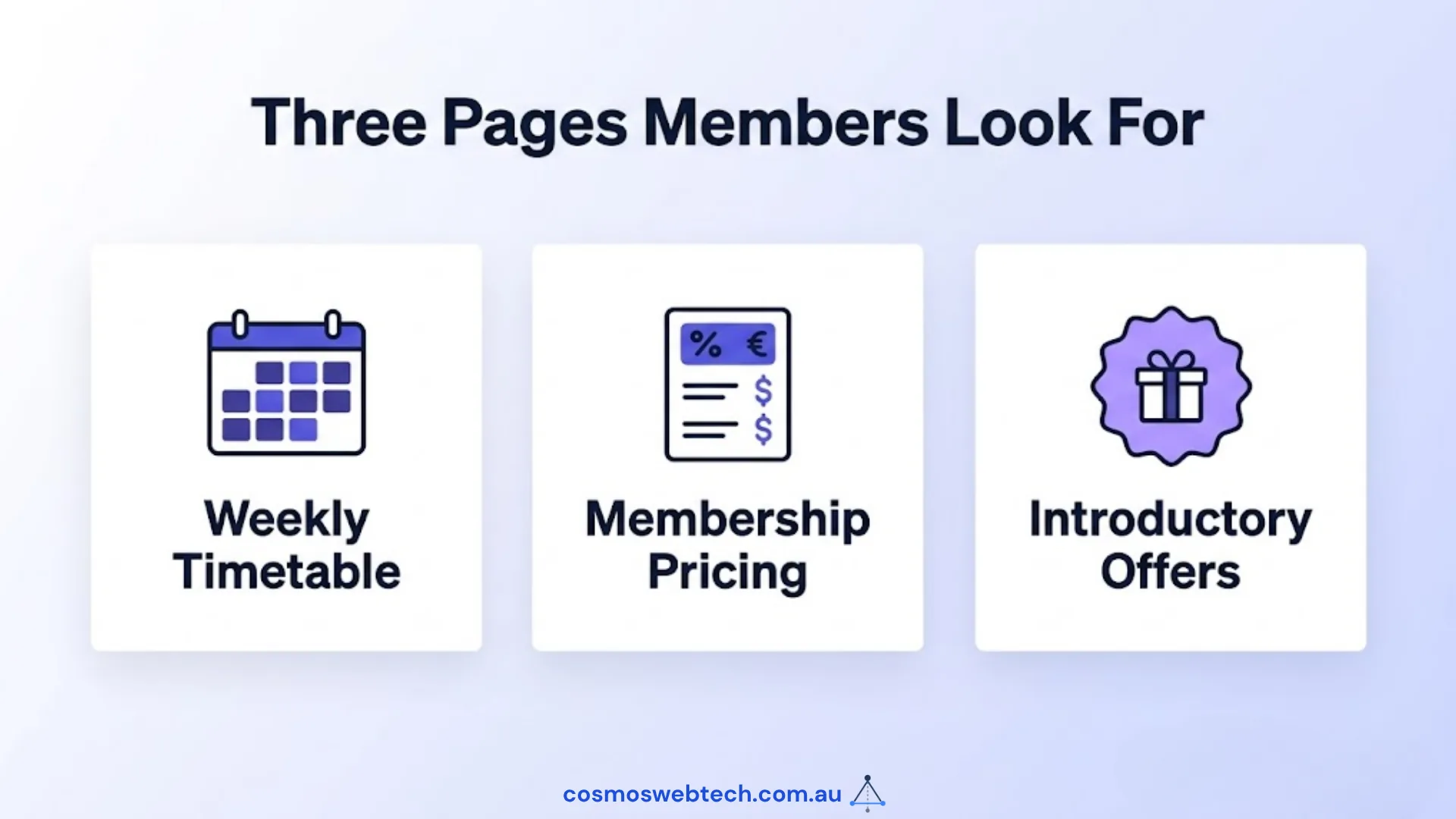
A gym website should include a free trial or intro offer landing page, a clear membership pricing page, an online class timetable, facility photos and video tours, personal trainer profiles, transformation stories, a corporate membership page, online signup and payment, and prominent social proof such as Google reviews and member counts.
Why Your Gym’s Website Is Your Most Important Sales Tool
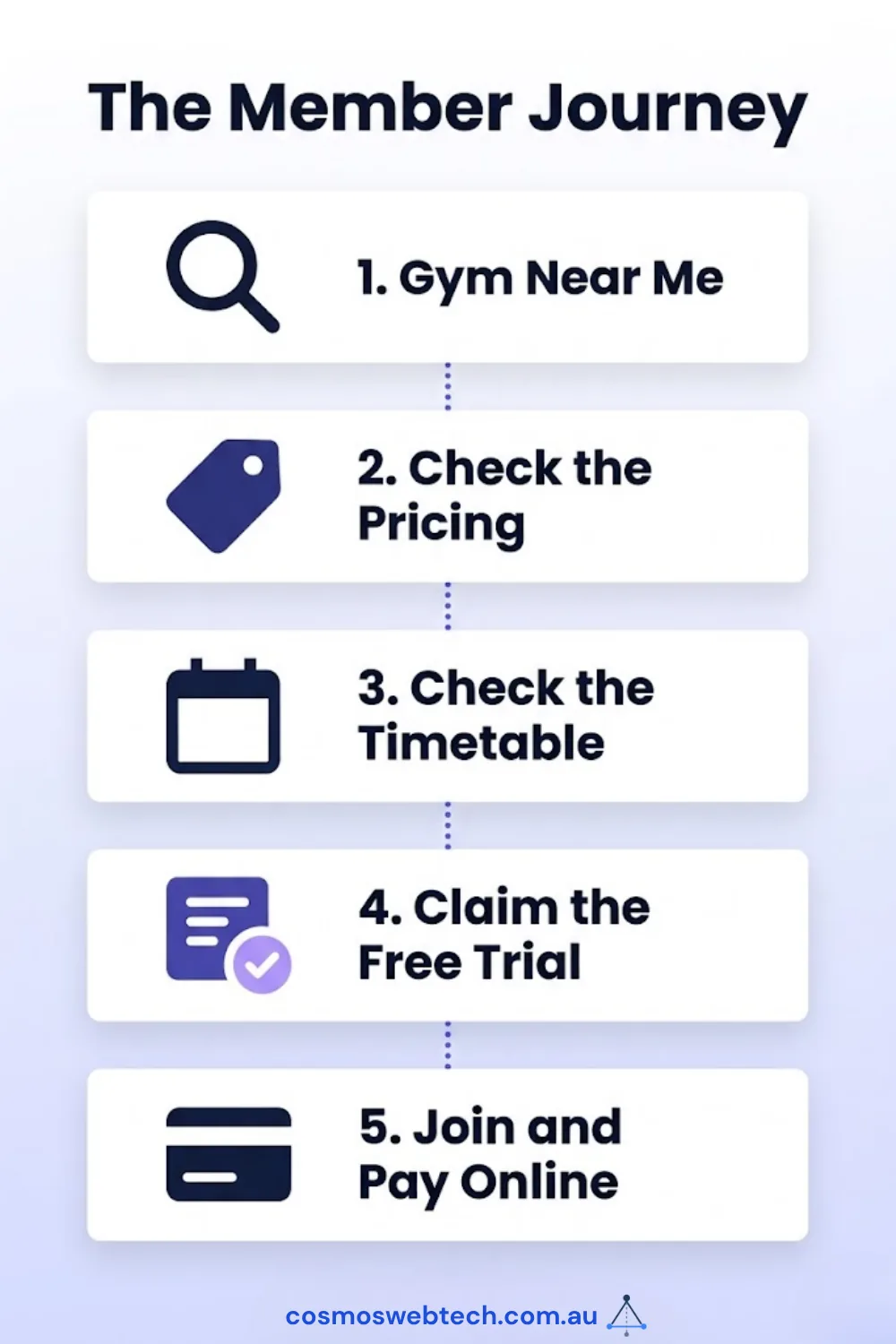
Think about how most people find a gym today. They Google something like “gym near me” or “24-hour gym Castle Hill”, scroll through a handful of results, and make a snap judgement based almost entirely on what they see in the first 10 seconds of landing on your site.
Your front desk staff can be the friendliest people in Western Sydney. Your equipment can be brand new. Your trainers can be exceptional. But if your website looks like it was built in 2014, loads slowly on a phone, or makes it hard to find your prices — that potential member is already gone.
The fitness industry is intensely competitive in Greater Western Sydney. Anytime Fitness, Snap Fitness, and Fitness First all have significant local presences. The only way an independent gym wins is by creating a more compelling, more personal, and more trustworthy online experience. That starts with professional fitness centre website design built specifically for the Australian market.
The Must-Have Pages and Features for Your Gym Website
1. Free Trial or Intro Offer Landing Page
This is your single most important conversion tool. Every gym website in Australia that performs well has a dedicated page — or at minimum a highly visible section — offering a free trial, a discounted first week, or a no-commitment intro pass.
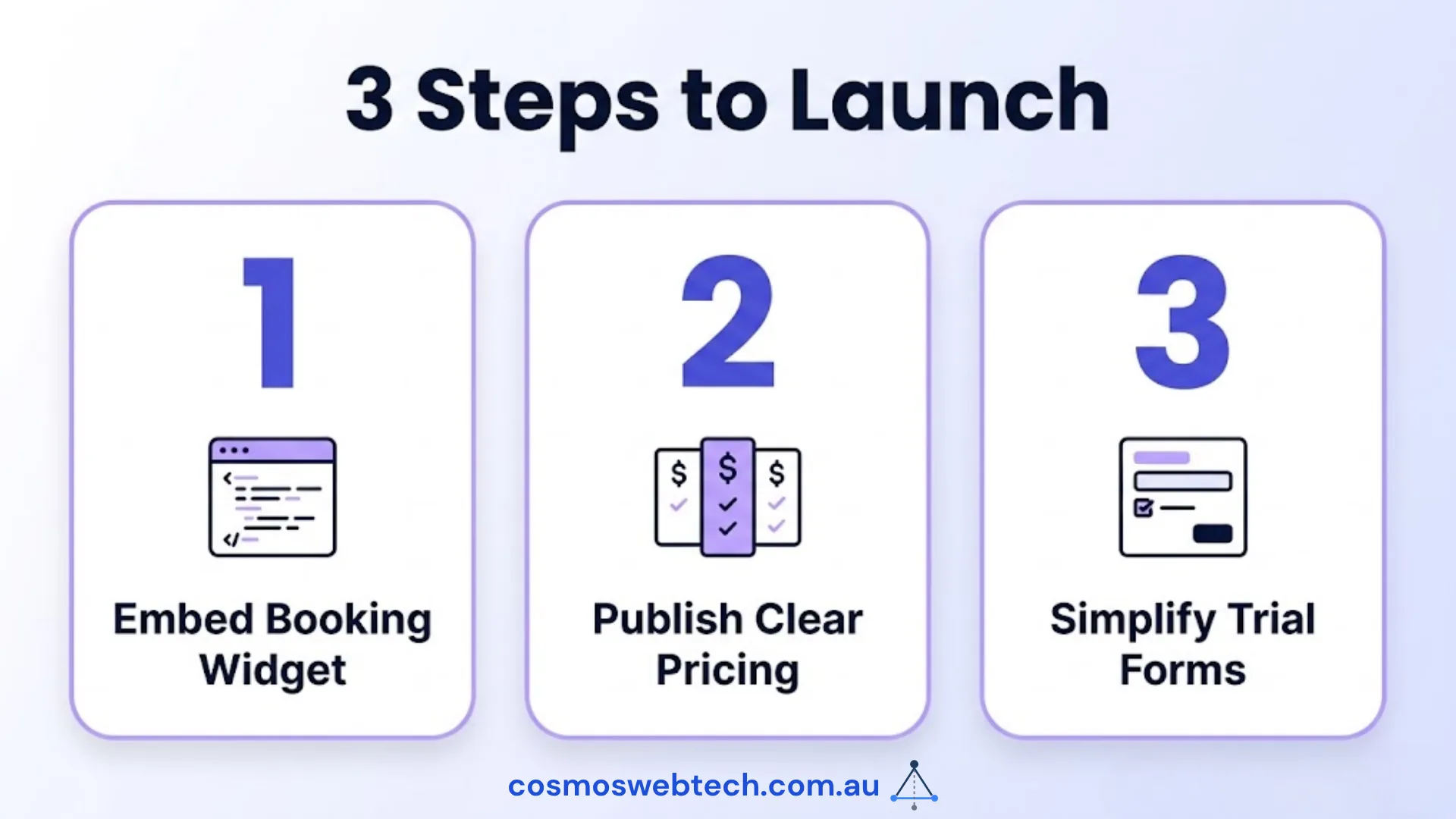
Make it impossible to miss: a bold banner at the top of your homepage, a sticky button on mobile, and a simple form that takes under 60 seconds to complete. Capture name, email, and phone only. The more fields you add, the fewer people complete it.
2. Membership Pricing Page
Hiding your prices is one of the fastest ways to lose potential members. People searching for a gym are comparison shopping. If they cannot find your prices, they will assume they cannot afford you and move on.
Be transparent. List every tier clearly — casual visits, standard membership, premium access, family plans, student rates, and corporate packages. If you offer direct debit fortnightly billing, show the per-fortnight cost prominently alongside the annual equivalent. Australians respond well to that format.
3. Online Class Timetable
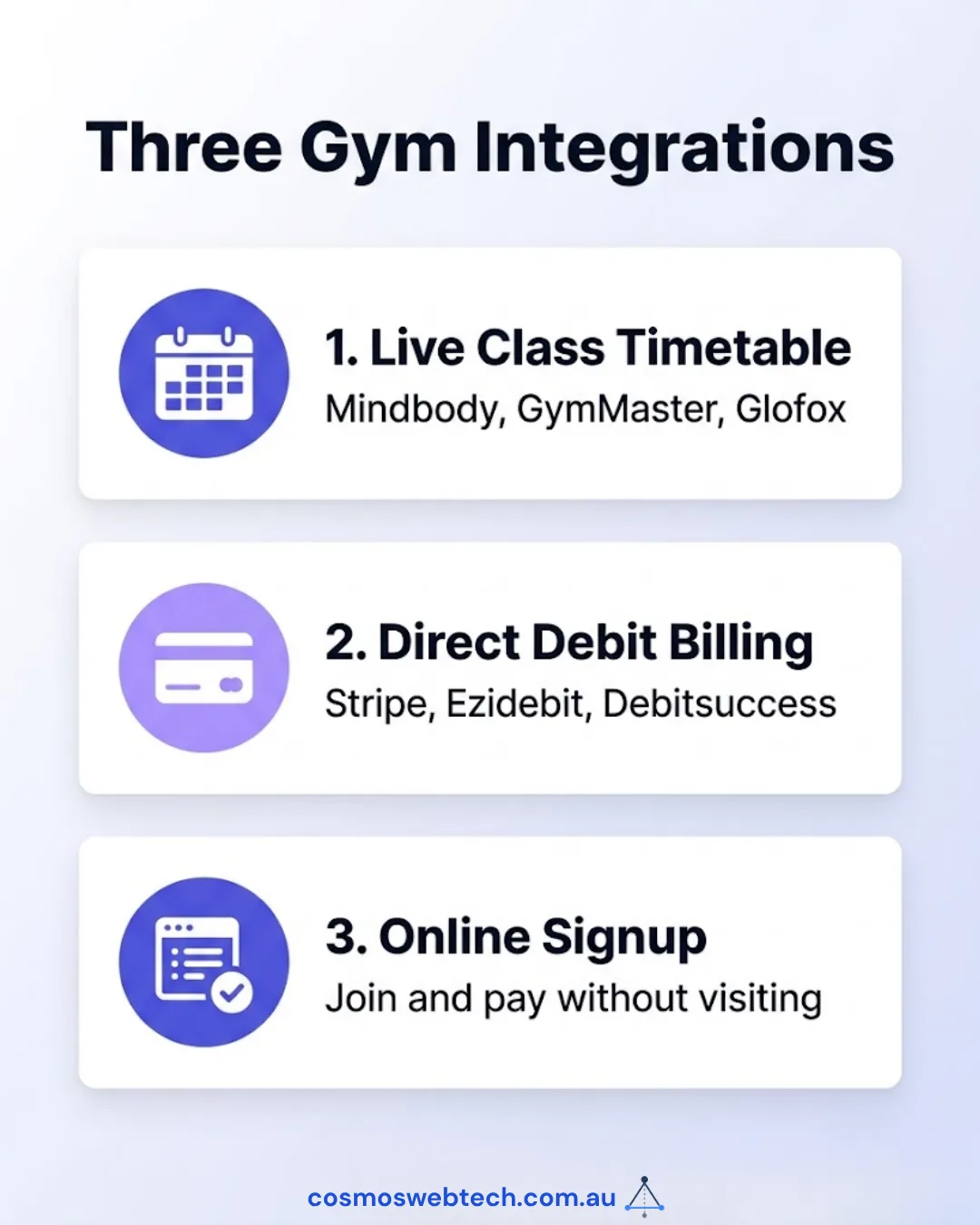
A static PDF timetable uploaded once a quarter is no longer good enough. Prospective members want to see what is on this week and book directly from your site. Integrations with platforms like Mindbody, GymMaster, or Glofox let you embed a live, bookable timetable directly into your website — no phone calls required.
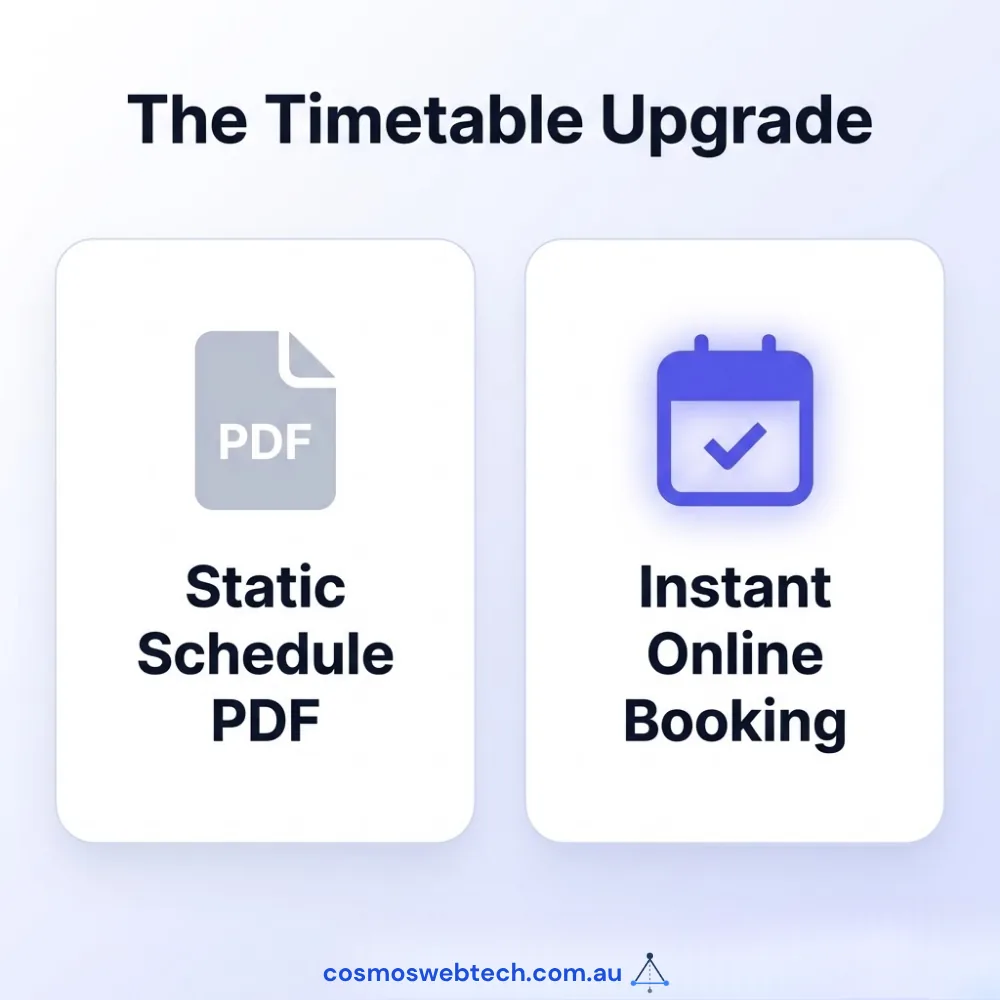
This also reduces admin load on your front desk. When members can book and cancel classes online at 11pm on a Tuesday, your staff spend their time coaching instead of answering the phone.
4. Facility Photos and Video Tours
Clean, high-quality photos of your gym floor, amenities, change rooms, and group fitness studio do more than look good — they signal quality and cleanliness. This matters enormously in a post-COVID environment where hygiene standards remain top of mind for many members.
A short 60–90 second walk-through video embedded on your homepage or About page dramatically increases the time visitors spend on your site, and significantly reduces the “I want to see it before I commit” friction that costs you sign-ups.
5. Personal Trainer Profiles
If you have in-house PTs or contracted trainers, give each of them a proper profile page. Include a professional photo, their qualifications (Certificate III/IV in Fitness, any specialisations), their training philosophy, and a direct booking link or enquiry form.
People hire PTs based on trust and personality fit. A well-written trainer profile can convert a fence-sitter into a paying PT client before they have set foot in the gym.
6. Transformation and Success Stories
Before-and-after photos, member testimonials, and video case studies are gold for gyms. They are real social proof that your gym actually delivers results — not just access to equipment.
Always get written permission from members before publishing transformation content, and be mindful of advertising standards around testimonial claims. Done right, a single compelling success story can drive dozens of new enquiries.
7. Corporate Membership Page
Many gyms overlook this, but Western Sydney has a large base of local businesses — warehousing, logistics, healthcare, professional services — whose employees would love a subsidised gym benefit. A dedicated corporate membership page targeting local business owners and HR managers opens up a whole additional revenue stream with higher lifetime value per account.
8. Online Signup and Payment Integration
In 2026, there is no excuse for a gym that requires a new member to come in and sign paperwork before they can start. Stripe, Ezidebit, and Debitsuccess all integrate cleanly with modern gym website platforms. Let people sign up, agree to terms, and set up their direct debit entirely online — ideally at midnight after they have just watched a fitness video and are feeling motivated.
9. 24/7 Access Information
If your gym offers 24-hour access — a key competitive advantage over many franchise gyms that have staffed hours only — make it a headline feature. Put it in your hero section, your Google Business profile, and your local SEO copy. “Open 24/7” is one of the highest-converting phrases in Australian gym search behaviour.
10. Social Proof: Reviews, Member Count, and Years Established
Display your Google rating prominently — ideally with a live widget pulling in recent reviews. If you have 500 members, say so. If you have been operating in the Hills District for 12 years, lead with that. These trust signals differentiate an established local gym from a newcomer and reduce the perceived risk of signing up.
Local Tips for Western Sydney and Hills District Gyms
If your gym is based anywhere in Greater Western Sydney — Castle Hill, Baulkham Hills, Kellyville, Penrith, Parramatta, or surrounds — your website’s local SEO needs to be dialled in.
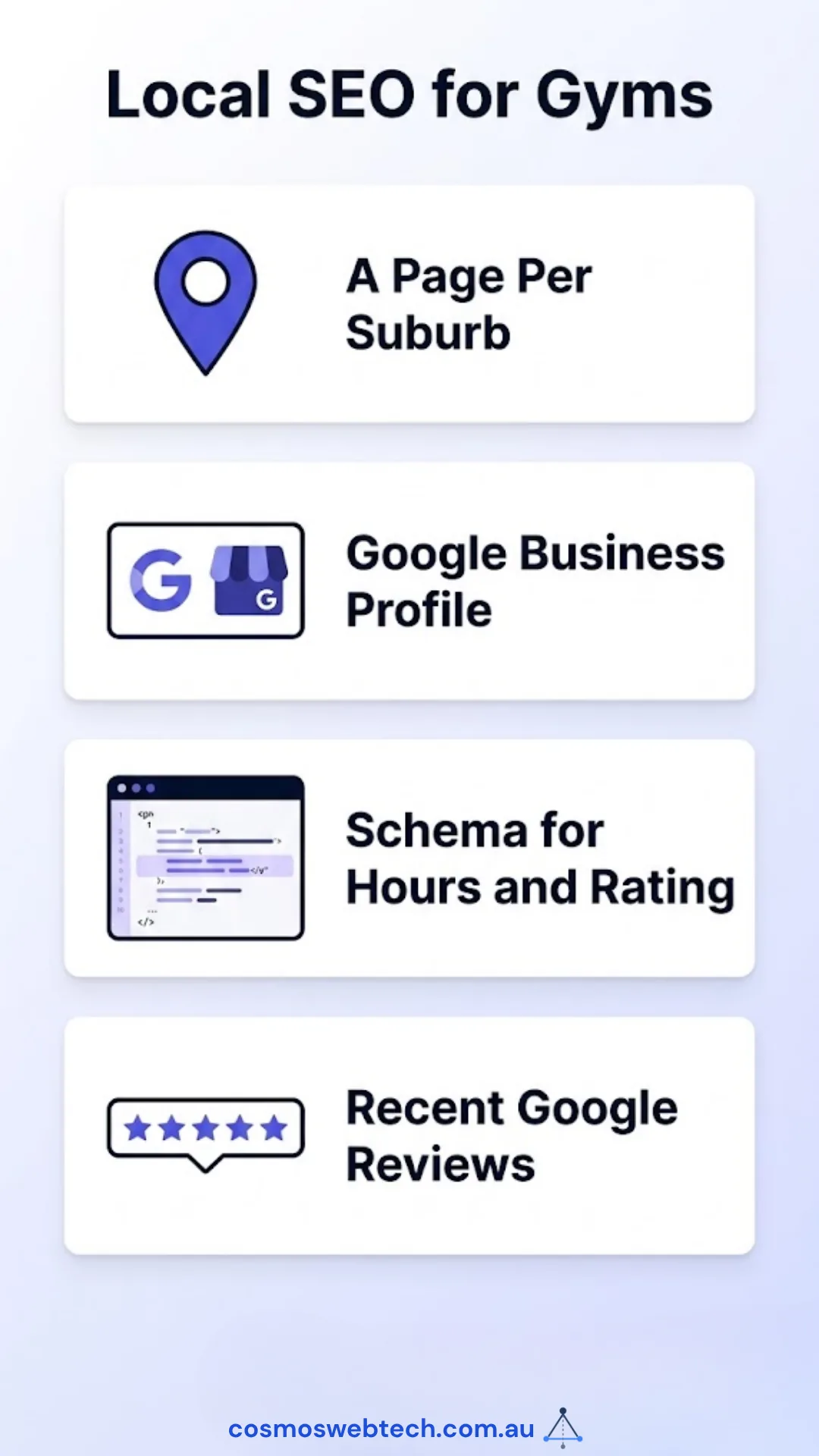
- Include your suburb and nearby suburbs naturally throughout your copy (not stuffed — naturally)
- Create a Google Business Profile and keep it updated with current hours, photos, and weekly posts
- Add schema markup so Google can display your hours, address, and star rating in search results
- Consider a page targeting each major suburb you want to rank for (e.g. “Gym in Castle Hill” or “Personal Trainer Baulkham Hills”)
- Encourage satisfied members to leave Google reviews — a stream of recent, authentic reviews outperforms old five-star ratings for local search ranking
Western Sydney is a community-oriented market. People trust recommendations. A gym that actively builds its local reputation online — through reviews, local content, and community involvement — will consistently outperform larger chains that rely on national brand recognition alone.
Gym Website Design Pricing in Australia
| Package | Inclusions | Price (AUD) |
|---|---|---|
| Starter | 5-page website, mobile-responsive, basic class timetable embed, contact form, Google Maps, SEO basics | From $2,000 |
| Business | 10+ pages, live bookable timetable integration (Mindbody/Glofox), membership pricing page, trainer profiles, Google review widget, basic local SEO | From $3,500 |
| E-commerce / Full Membership | Everything in Business plus online signup and payment, member portal integration, corporate membership page, video tour, advanced local SEO, ongoing support | From $6,000 |
Ongoing maintenance, hosting, and SEO retainers are typically quoted separately. Most gyms benefit from at least a basic monthly SEO package to maintain and grow their local search rankings over time.
What You Will Achieve With the Right Gym Website Design in Australia
A professionally designed gym website doesn’t just look better — it measurably grows your membership base. You will convert more of the people already searching for a gym in your area. Your free trial form will generate a steady stream of warm leads. Your class timetable will reduce admin calls. Your trainer profiles will attract PT clients before they even visit.
And over time, as your local SEO strengthens, you will appear higher in Google searches for your suburb — which means less reliance on expensive paid advertising and more organic, consistent growth.
For gyms in Western Sydney specifically, a strong online presence is one of the most cost-effective investments you can make. The market is there. The search volume is there. The question is whether your website is ready to capture it.
Ready to Build a Gym Website That Actually Gets Members?
If you are ready to take your gym’s online presence seriously, we would love to help. Cosmos Web Tech works with fitness centres and personal trainers across Greater Western Sydney to build websites that convert visitors into members.
Get a free consultation — we will review your current website and talk through what is possible for your budget. You can also browse our fitness website templates to see what a high-performing gym website looks like in practice.
Membership platforms and class-booking systems live in the cloud. Cloud Geeks provides managed cloud and IT support for Australian fitness and wellness businesses.
Ash Ganda covers how Australian fitness operators are using automation to lift member retention and reduce churn without inflating headcount.
Member apps with class booking, progress tracking, and loyalty rewards drive retention. Awesome Apps builds them for Australian gyms and wellness brands.
Part of the Ganda Tech Services family, Cosmos Web Tech delivers specialist web design and digital marketing for Australian small and medium businesses.
Frequently Asked Questions
How much does gym website design cost in Australia? Gym website design in Australia typically ranges from $1,500 for a basic 5-page starter site to $6,000 or more for a full-featured site with online membership signup, live class bookings, and payment integration. The right investment depends on the size of your gym and how many features you need from day one.
What is the most important feature on a gym website? The free trial or intro offer landing page is consistently the highest-converting element on any Australian gym website. Make it prominently visible, keep the form short, and respond to enquiries within the hour. A fast follow-up dramatically increases the conversion rate from form submission to first visit.
Can I integrate my gym’s class timetable into my website? Yes. Platforms like Mindbody, GymMaster, and Glofox all provide embeddable timetable widgets and booking systems that sync with your website in real time. This means members can view class schedules and book directly from your site without you manually updating a PDF timetable.
How do I get my gym to rank on Google in my area? Local SEO for gyms involves a combination of a well-structured website with suburb-specific content, an active and complete Google Business Profile, regular acquisition of genuine Google reviews, and consistent NAP (name, address, phone) information across online directories. A professional web agency can also implement schema markup to help Google understand your business details.
Do I need a separate website for my personal training business? If you are a personal trainer operating independently — not as part of a gym — a dedicated personal trainer website is worthwhile. It lets you showcase your qualifications, training philosophy, client results, and booking system without competing for space with gym membership content. Many personal trainers in Western Sydney start with a clean 3–5 page site and expand from there.