
According to the Australian Digital Health Agency, over 90% of Australians have searched online for health information, and a growing share of those searches end with a patient booking an appointment — or moving on to the next practice. If your clinic’s website looks like it was built in 2013, loads slowly on a phone, or makes it hard to find your opening hours, you are losing patients before they ever walk through the door.
GP clinic website design in Australia has changed significantly in recent years. The post-COVID shift to telehealth, the rise of HotDoc and HealthEngine for online bookings, and patients’ higher expectations around trust and transparency all mean that a basic brochure site no longer cuts it. This guide walks you through exactly what your practice needs — and why it matters for both patients and your bottom line.
Why Your GP Practice Website Is Your Front Desk
Think of your website as a second receptionist — one that works 24 hours a day, seven days a week. When a patient moves to the Hills District or Western Sydney, one of the first things they do is Google “GP near me” and compare the first few results. They are not just reading — they are forming a trust judgement in seconds.
A poorly designed or outdated site signals that the practice may be equally behind on other things. A clean, fast, informative site does the opposite: it reassures a nervous patient that your clinic is professional, organised, and ready to help.
What Should a GP Clinic Website Include?
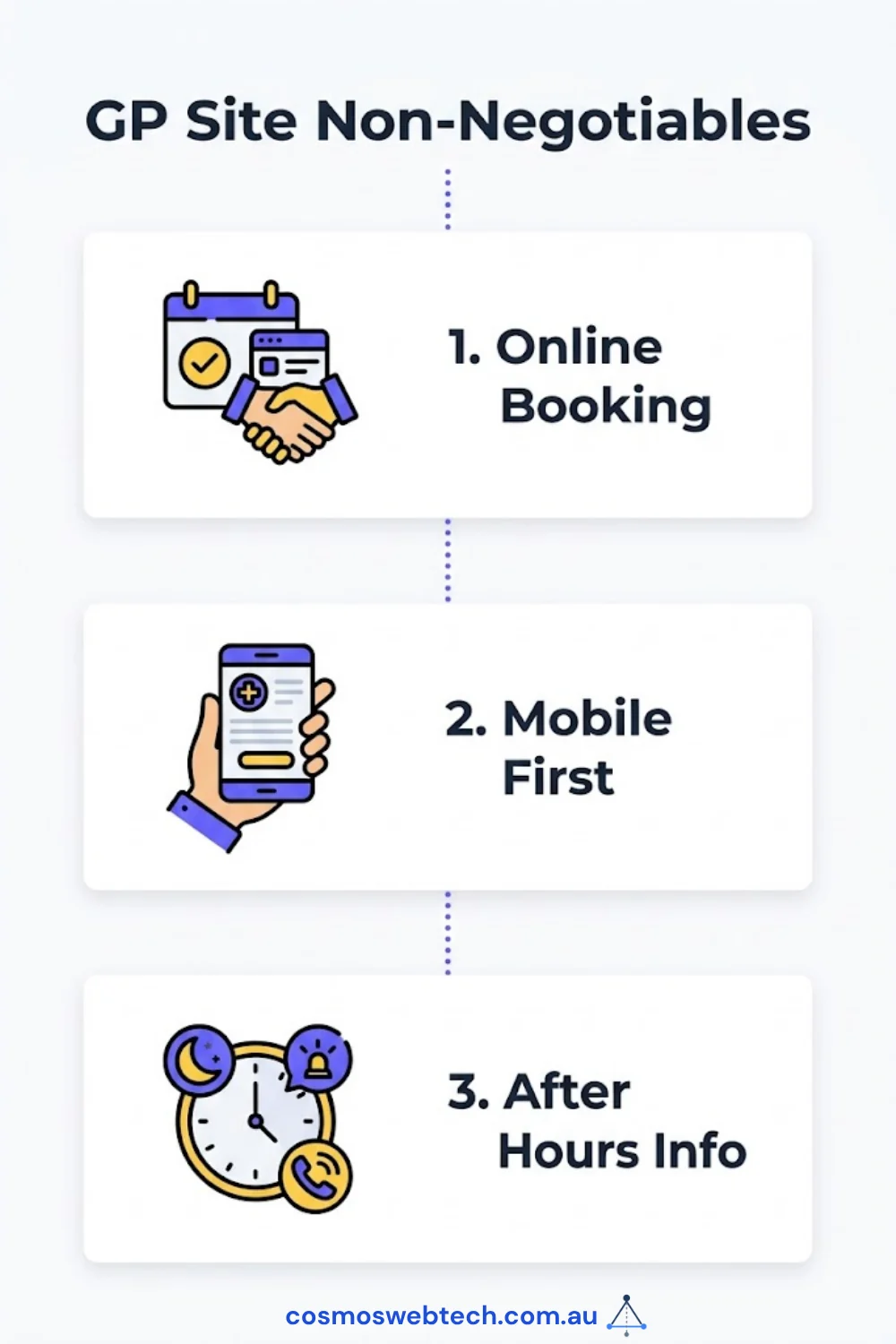
A GP clinic website should include online booking integration (HotDoc or HealthEngine), practitioner profiles with AHPRA-compliant credentials, bulk billing and fee information, telehealth service details, after-hours and emergency contacts, accreditation logos, and a mobile-responsive design — since most patients browse and book on their phones.
The Non-Negotiables for Medical Practice Website Design in Australia

1. Online Booking That Actually Works
Patients expect to book online at 10 pm on a Tuesday without calling anyone. The two dominant platforms in Australian general practice are HotDoc and HealthEngine. Both offer embeddable widgets that sit directly on your website, so a patient can see available appointment times without leaving your site.
Whatever platform you use, the booking button needs to be visible on every page — especially on mobile. If a patient has to hunt for it, many simply will not bother.
2. AHPRA Advertising Compliance
This is the one area where GP website design in Australia differs significantly from other industries. The AHPRA advertising guidelines prohibit registered health practitioners from making claims that are unsubstantiated, misleading, or that use testimonials from patients. This means:
- No “best doctor in Sydney” claims unless you can substantiate them
- No patient testimonials or star ratings on the site itself
- No before-and-after images unless AHPRA specifically permits them for your specialty
A web designer who does not understand AHPRA requirements can inadvertently put your registration at risk. Always review your site content against the current guidelines, and when in doubt, keep it factual.
3. Practitioner Profiles Done Right
Patients want to know who they are going to see. A good practitioner profile includes:
- Full name and qualifications
- AHPRA registration number (this builds trust and is easy to verify)
- Areas of clinical interest
- Languages spoken (especially valuable in multicultural areas like Western Sydney)
- A professional photo — warm and approachable, not a stiff corporate headshot
Keep the copy factual and credential-focused to stay within AHPRA guidelines.
4. Bulk Billing and Fee Information
One of the most common search queries attached to GP clinics is “bulk billing.” If your practice bulk bills — even selectively — say so clearly on your website. If you have a mixed billing model, explain it simply. Fee transparency reduces anxiety for patients and reduces the time your reception staff spend answering the same phone question dozens of times per week.
5. A Dedicated Telehealth Page
Telehealth is now a baseline expectation for many patients, particularly for follow-up consultations, mental health appointments, and patients in outer suburbs with limited transport. A dedicated telehealth page should cover:
- Which appointment types are available via telehealth
- Which platform you use (Coviu, Zoom for Healthcare, HotDoc Telehealth)
- How patients access Medicare rebates for telehealth
- A simple step-by-step guide for patients who are less tech-confident
6. After-Hours and Emergency Information
This is a legal and ethical must. Your website should clearly display:
- Your standard opening hours
- What to do after hours (e.g., call 13SICK, present to the nearest ED)
- The address and phone number of your nearest emergency department
- A link to 000 and Lifeline (13 11 14) where appropriate
Make this information easy to find — ideally in the header or footer on every page.
7. Trust Signals and Accreditation
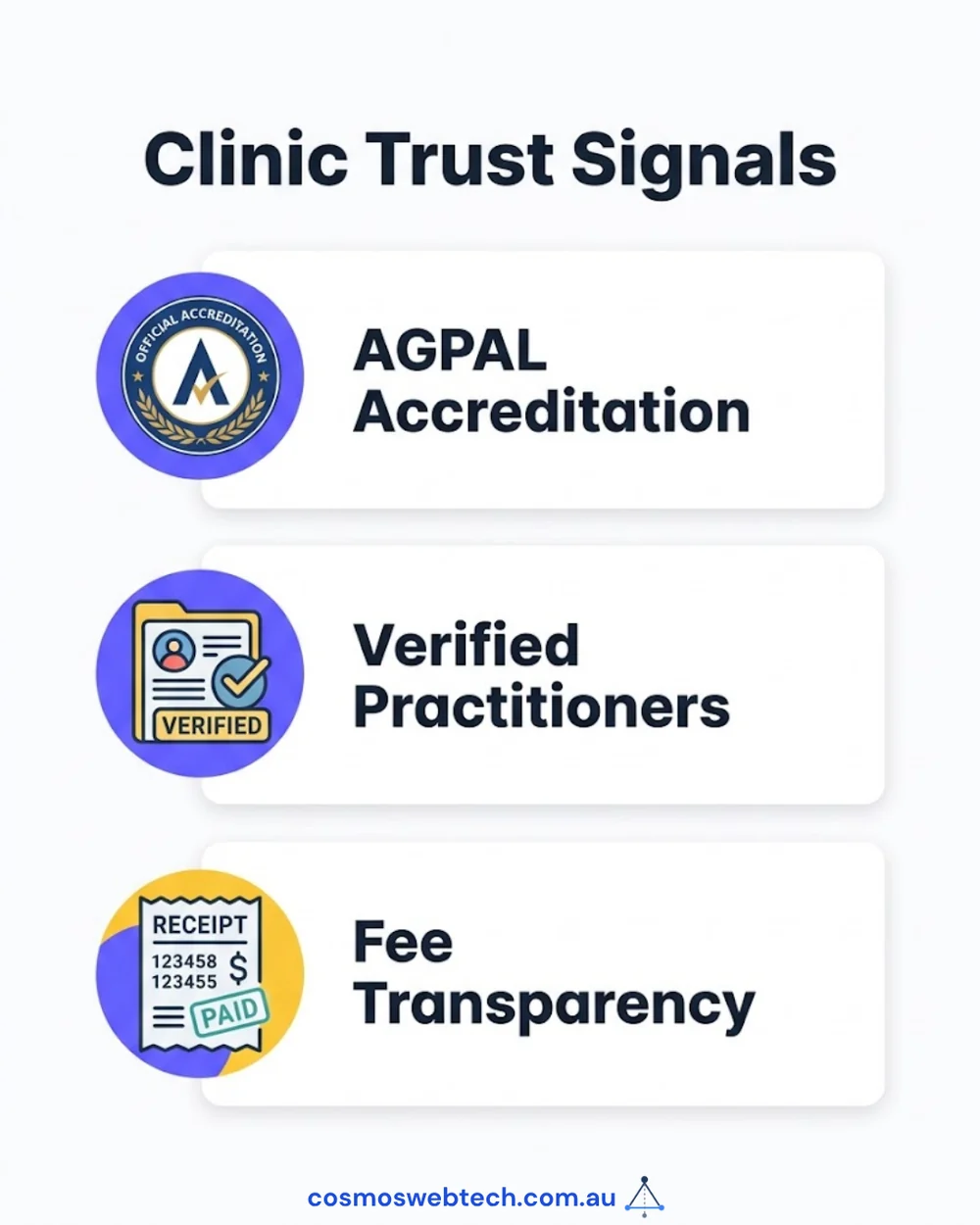
If your practice holds AGPAL or QPA accreditation, display the logo prominently. These are recognised quality marks that patients understand. Years in operation, number of practitioners, and any community partnerships also build confidence.
Local Context: Western Sydney and Hills District Practices
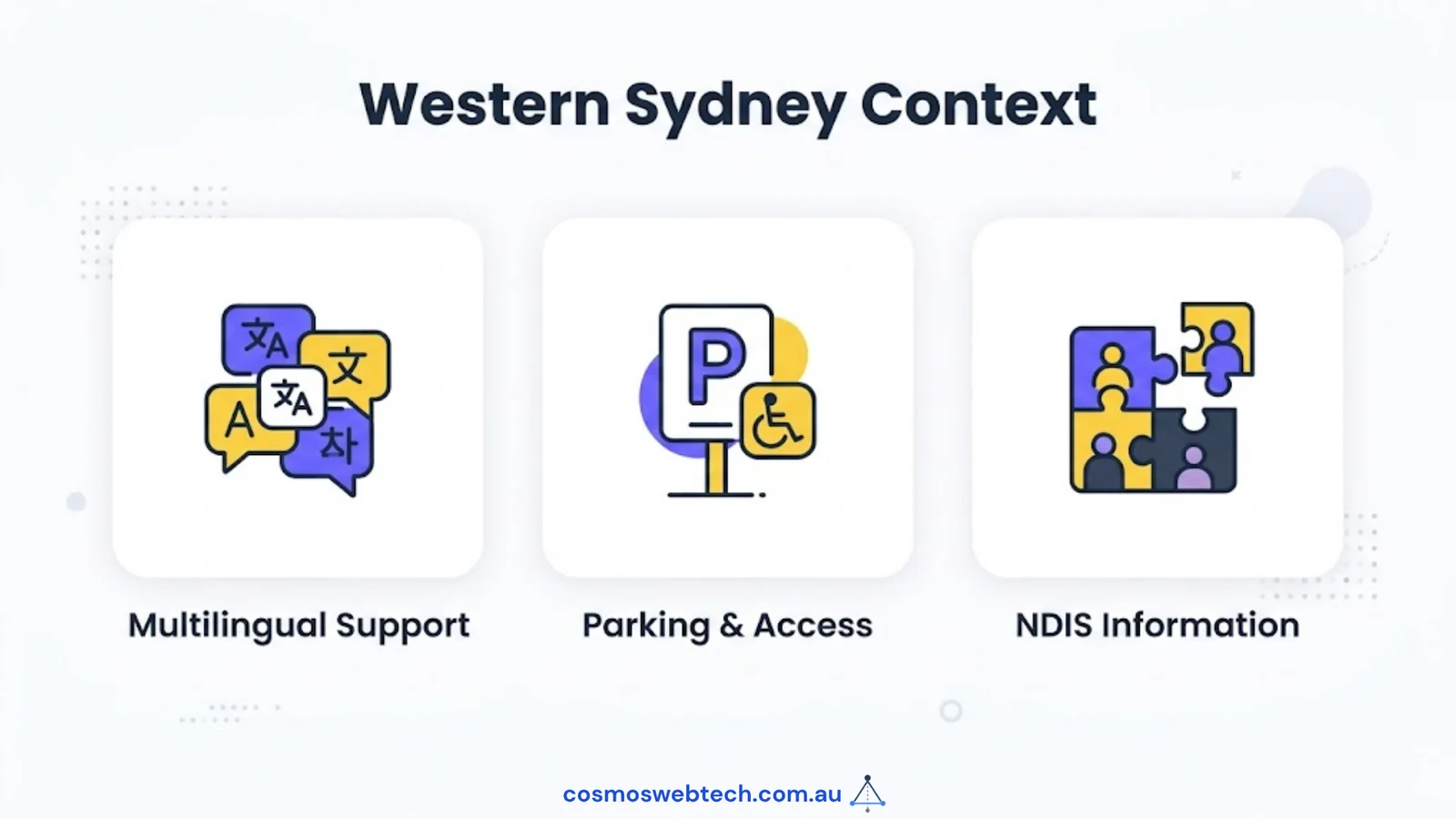
Practices in Western Sydney and the Hills District serve some of the most culturally and demographically diverse communities in Australia. Worth building into your GP clinic website design if this is your area:
- Multilingual content or a Google Translate integration — communities in Parramatta, Blacktown, and Castle Hill include large populations speaking Mandarin, Cantonese, Hindi, Arabic, and Tagalog
- Clear public transport and parking information — many patients coming from outer suburbs need this
- NDIS information if your practice sees NDIS participants
- Aged care and home visit services if relevant — Hills District has a significant and growing over-65 population
GP Clinic Website Pricing in Australia
| Package | What’s Included | Starting From (AUD) |
|---|---|---|
| Starter | 5-page site, mobile responsive, booking widget, contact form, basic SEO | $1,500 |
| Business | Up to 10 pages, practitioner profiles, telehealth page, AHPRA content review, Google Business setup | $3,500 |
| Full Practice | Unlimited pages, multilingual support, custom booking flow, accreditation display, ongoing SEO, priority support | $6,000 |
Ongoing costs to budget for include hosting ($20–$60/month), domain renewal ($20–$30/year), and any HotDoc or HealthEngine subscription fees.
What a Well-Designed Practice Site Will Do for You
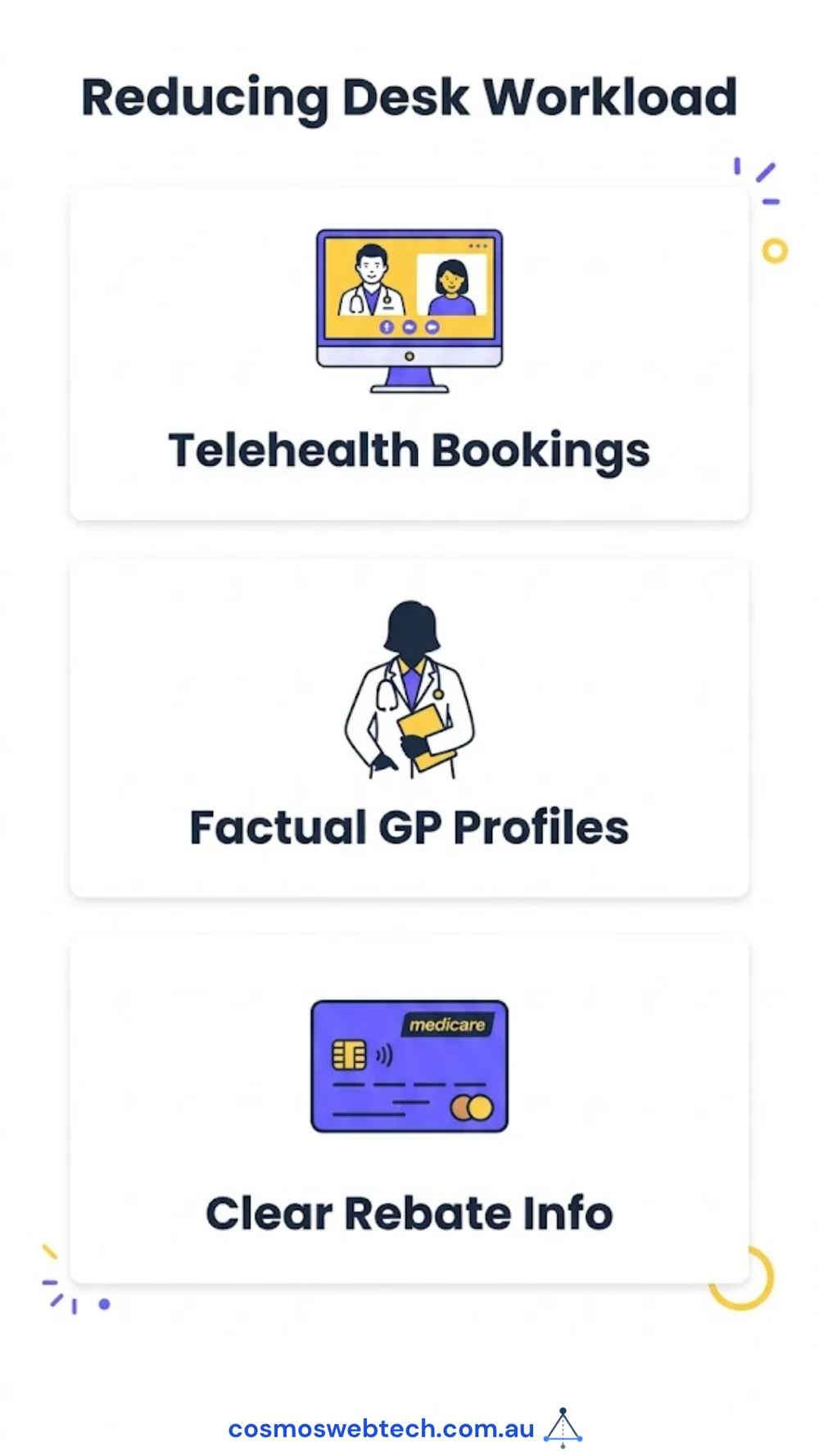
A properly built doctor website in Australia does more than look good. It:
- Reduces reception workload by answering common questions before the phone rings
- Builds new patient numbers by ranking in local Google searches
- Reduces no-shows when confirmation and reminder integrations are set up correctly
- Supports locum and new GP recruitment — practitioners do look at a practice’s website before joining
Getting Started with GP Clinic Website Design in Australia

The best first step is a plain-English conversation about what your practice actually needs — not a sales pitch for the most expensive package. Start with your patients: what questions do they ask most often? What do they struggle to find? Build the website around those answers.
If you are running a practice in Western Sydney, the Hills District, or anywhere else in Australia and you are ready to upgrade your online presence, get in touch for a free consultation to talk through your clinic’s requirements with no obligation. You can also browse our health and medical website templates to get a sense of what is possible.
For practices needing patient-data hosting that meets the Privacy Act 1988 and APP requirements — Cloud Geeks provides Australian-onshore cloud and managed IT for Hills District medical and allied health practices.
Ash Ganda covers how Australian healthcare practices are using AI for admin automation, intake processing, and clinical documentation without compromising patient privacy.
If your practice is planning a patient-facing booking or check-in app — Awesome Apps builds iOS and Android apps for Australian medical and allied health practices.
Part of the Ganda Tech Services family, Cosmos Web Tech delivers specialist web design and digital marketing for Australian small and medium businesses.
Frequently Asked Questions
How much does a GP clinic website cost in Australia? A basic GP practice website starts from around $1,500 for a simple mobile-responsive site with an online booking widget. A more complete solution with practitioner profiles, telehealth pages, and ongoing support typically starts from $3,500. Larger multi-doctor practices with custom requirements start from $6,000.
Do GP websites in Australia need to comply with AHPRA advertising guidelines? Yes. All registered health practitioners in Australia must ensure their website advertising complies with AHPRA advertising guidelines. This means avoiding unsubstantiated claims, not using patient testimonials, and keeping all health claims factual and evidence-based. A web designer experienced in medical practice website design in Australia should be familiar with these requirements.
What online booking system should a GP clinic use? HotDoc and HealthEngine are the two most widely used online booking platforms for GP clinics in Australia. Both integrate directly into your website via an embeddable widget. The right choice depends on your practice management software — check compatibility before committing.
Should a GP clinic website mention bulk billing? Yes, absolutely. Bulk billing status is one of the most searched pieces of information patients look for when choosing a GP. If you bulk bill — even selectively for concession card holders or children — state this clearly on your homepage and fees page.
How do I make sure my GP website ranks in local Google searches? Local SEO for a GP practice involves optimising your Google Business Profile, including your suburb and surrounding areas in your page content, embedding a Google Map, earning links from local directories, and ensuring your site loads quickly on mobile. A gp clinic website design in australia built with local SEO from the start will outperform one that has SEO bolted on later.